In the historical port town of Bharuch, along the quiet banks of the Narmada River, lives one of India’s most extraordinary yet endangered textile traditions: Sujani weaving. Unlike conventional quilting, where layers of fabric are stitched together after filling, Sujani is a masterwork of simultaneous creation. It is a rare double-cloth handloom technique where padding—traditionally raw cotton—is stuffed directly into pocketed squares on the loom itself as the fabric takes shape. Today, this 160-year-old craft stands at a crucial historical crossroads, rescued from near-extinction by dedicated interventions such as Project ROSHNI.
The Craftsmanship: What Makes Sujani Truly Unique
“Sujani is not merely fabric woven together; it is a seamless sanctuary of cotton created entirely upon the loom without a single external needle or thread.”
The intricate process of weaving ensures that the cotton filler remains permanently trapped between two distinct, woven layers of cloth. The result is a quilt-like textile that boasts exceptional durability, natural insulation, and a soft checkered aesthetic. Because no machine or post-weaving needlework is involved, a single Sujani blanket can take two artisans up to three days to complete, requiring over a month just to prepare and dress the handloom.
A Heritage at Risk: The Threat of Extinction
Originating around the 1860s—legend holds that a Bharuch native learned the technique while imprisoned in the Andaman Islands alongside an Assamese craftsman—Sujani once flourished across dozens of households in Bharuch. However, industrialization, power looms, and the grueling physical labor demanded by the loom led to a precipitous decline. By recent years, this majestic craft survived in the hands of only two or three elderly families, most notably the Sujniwalas, with younger generations gravitating toward urban industrial employment.
Project ROSHNI: Reimagining the Loom for a New Era
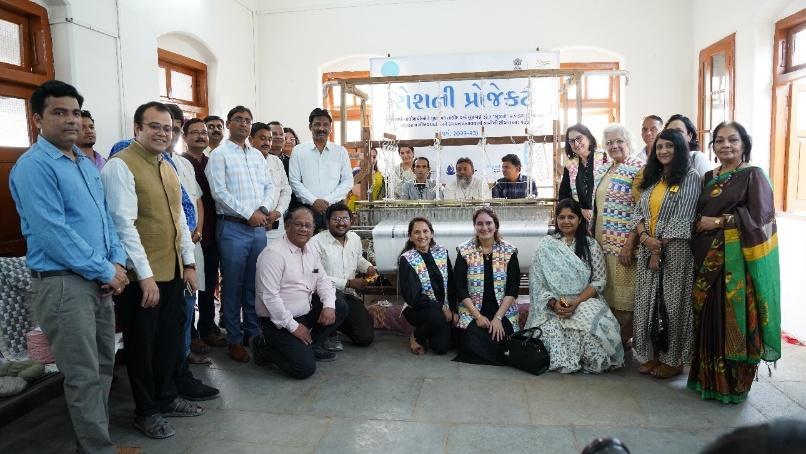
Recognizing that the loss of Sujani would erase an irreplaceable chapter of India’s cultural tapestry, initiatives like Project ROSHNI (spearheaded by the District Administration of Bharuch) were launched to ignite a powerful revival. Project ROSHNI approaches craft conservation through a holistic framework: preserving heritage while building economic sustainability.
Key Highlights & Milestones of Project ROSHNI (Phases I & II):
🏛️ Institutional Foundation
Created and activated a functional Cooperative Society (Shree Bharuch Jilla Sujani Utpadan ane Vechan Sahkari Mandali Ltd) to empower weavers structurally and economically.
🏡 Rewa Sujani Center
Established the center as a single-point hub for end-to-end craft operations, hands-on skill development, experiential tourism, and historical preservation.
⚙️ Loom R&D
Developed modern, ergonomically improved handlooms to lessen the physical burden on artisans while boosting production efficiency.
📜 IP Protection & Recognition
Successfully documented the craft and secured the prestigious Geographical Indication (GI) Tag for Bharuch Sujani Weaving, safeguarding origin and intellectual property.
🇮🇳 Government Alignment
Positioned Sujani as the official One District One Product (ODOP) of Bharuch district and facilitated weavers' access to state social welfare and artisan schemes.
🎖️ Artisan Excellence
Promoted the art and its creators, leading to State Recognition awards for two master weavers.
🎨 Design & Quality Upgrades
Partnered with premier design institutes such as National Institute of Design (NID) and National Institute of Fashion Technology (NIFT) for contemporary design and product diversification.
🛍️ Market Handholding
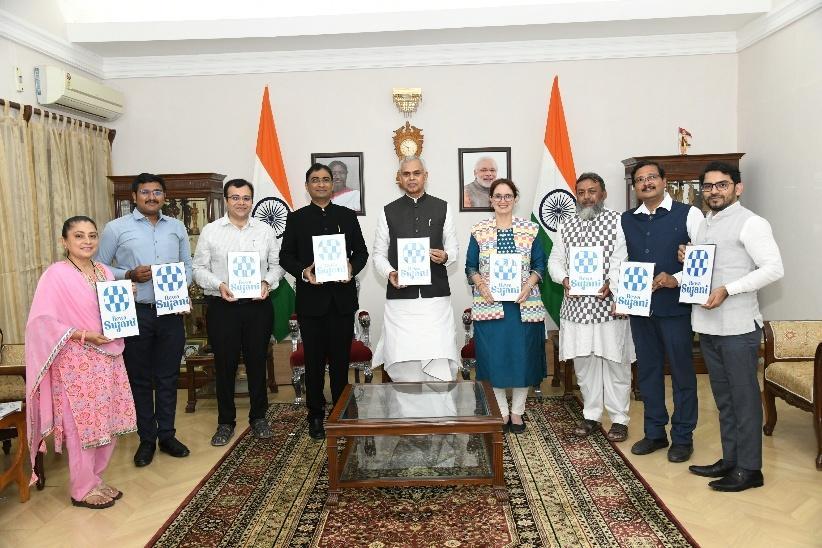
Provided continuous support for business development, marketing, brand creation (Rewa Sujani), and expanding market access.
Contemporary Relevance: Conscious Luxury
In an era dominated by fast fashion and synthetic mass production, Sujani weaving stands out as a symbol of slow, conscious luxury. Modern interior designers and global markets value its zero-waste, needleless engineering and sustainable cotton build. Through the combined force of artisan resilience and Project ROSHNI’s structured interventions, Bharuch’s ancient loom art is not merely surviving—it is rightfully reclaiming its status as a world-class textile masterpiece.
Grateful Acknowledgements — We Sincerely Thank:
Project ROSHNI Gallery